
Locus Founder is an AI agent that builds and runs internet businesses. That sentence gets misread a lot, so let's be precise about it. It is not a website builder with a chatbot bolted on. You don't pick a template, drag boxes around, or fill in forms. You have a conversation. You tell the agent what you want to sell, or admit you have no idea, and it does the rest: researches the market, argues with you a little, designs your brand, builds your site, connects payments, and then keeps working after launch.
This guide walks through the whole process, from your first message to a live business. The first part, going from nothing to a landing page you can look at, takes about ten minutes of your time. The parts after that take longer, and we'll be honest about which is which.
What you need before you start
Almost nothing, which is the point.
- A business idea, or a willingness to find one. Both paths work.
- About ten minutes for the first conversation.
- No code, no design skills, no existing audience.
You don't need a company, a logo, or a name. If you have any of those already, great, the agent will use them.
Step 1: Tell the agent what you're thinking
The first thing the agent asks is whether you already have an idea. Answer honestly.
If you have one, describe it the way you'd describe it to a friend. "I want to sell hiking gear for people with big dogs" is a perfectly good starting point. The agent will pull out the pieces it needs: what you're selling, who it's for, and what the niche looks like. It fills gaps by asking, not by guessing.
If you don't have one, say so. The agent runs a short interview instead, maybe five or six questions about your skills, your interests, how much you can spend, and what you actually want out of this. Then it proposes three business ideas built around your answers, each grounded in real market research it runs while you wait. You pick the one that feels right. There's a whole separate guide on this if the idea stage is where you're stuck.
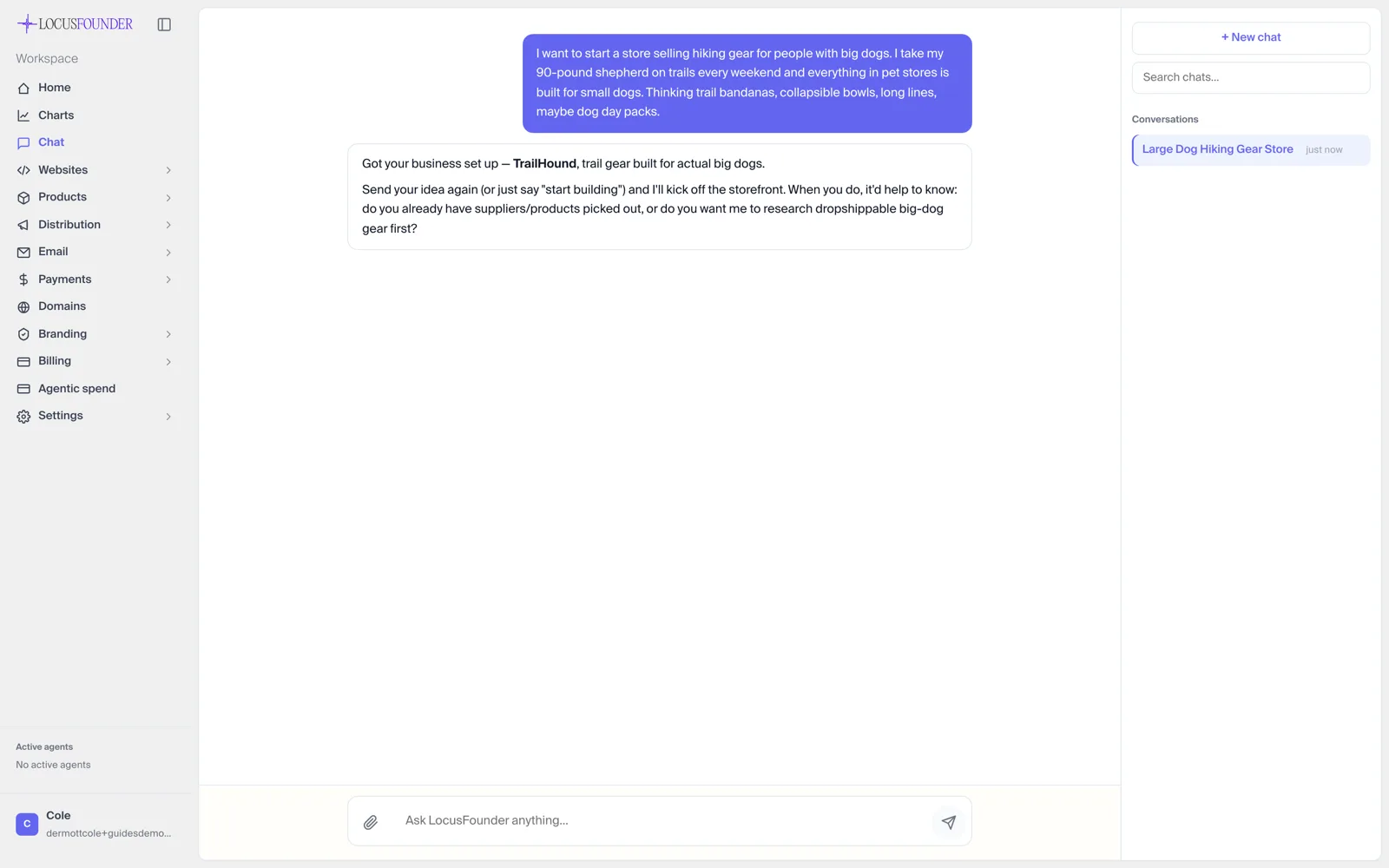 One message in plain language is enough. Here the founder describes big-dog hiking gear, and the agent sets up the business and asks the one question that matters next.
Step 2: Expect some pushback
Here's the part that surprises people. Once you've settled on an idea, the agent researches the market and raises a concern. A real one, based on what it found: a crowded niche, a pricing problem, a competitor doing the same thing with more money.
This is deliberate. Most new businesses fail because nobody asked a hard question early, when changing course was still cheap. An agent that agrees with everything you say would be pleasant and useless. So it asks you one hard question, and how you answer matters. Sometimes your answer is good and you move on. Sometimes the question changes your idea for the better. Either outcome beats finding out three months in.
Take this step seriously. It's the cheapest business advice you'll ever get.
Step 3: Give it a taste of your brand
Next comes a short round of brand questions. What vibe you're going for, colors you like, how the business should sound when it talks, brands you admire or can't stand. Four questions, roughly. You can attach images if you have a mood board or just a few screenshots of sites you like, but you don't have to.
Don't overthink this. "Warm, a little playful, no corporate speak" is enough to work with. You can change all of it later.
Step 4: Review the plan and your landing page
Now the agent goes quiet for a minute and writes an actual business plan: how you'll reach customers, what the launch schedule looks like, what it's going to build for you. Then it comes back with a proposal for your landing page. Headline, palette, fonts, what sections go where.
You approve it or you don't. If the headline feels wrong, say so and it rewrites it. When you're happy, the agent builds the page and sends you a live preview you can open in your browser. This is usually the moment the thing stops feeling hypothetical.
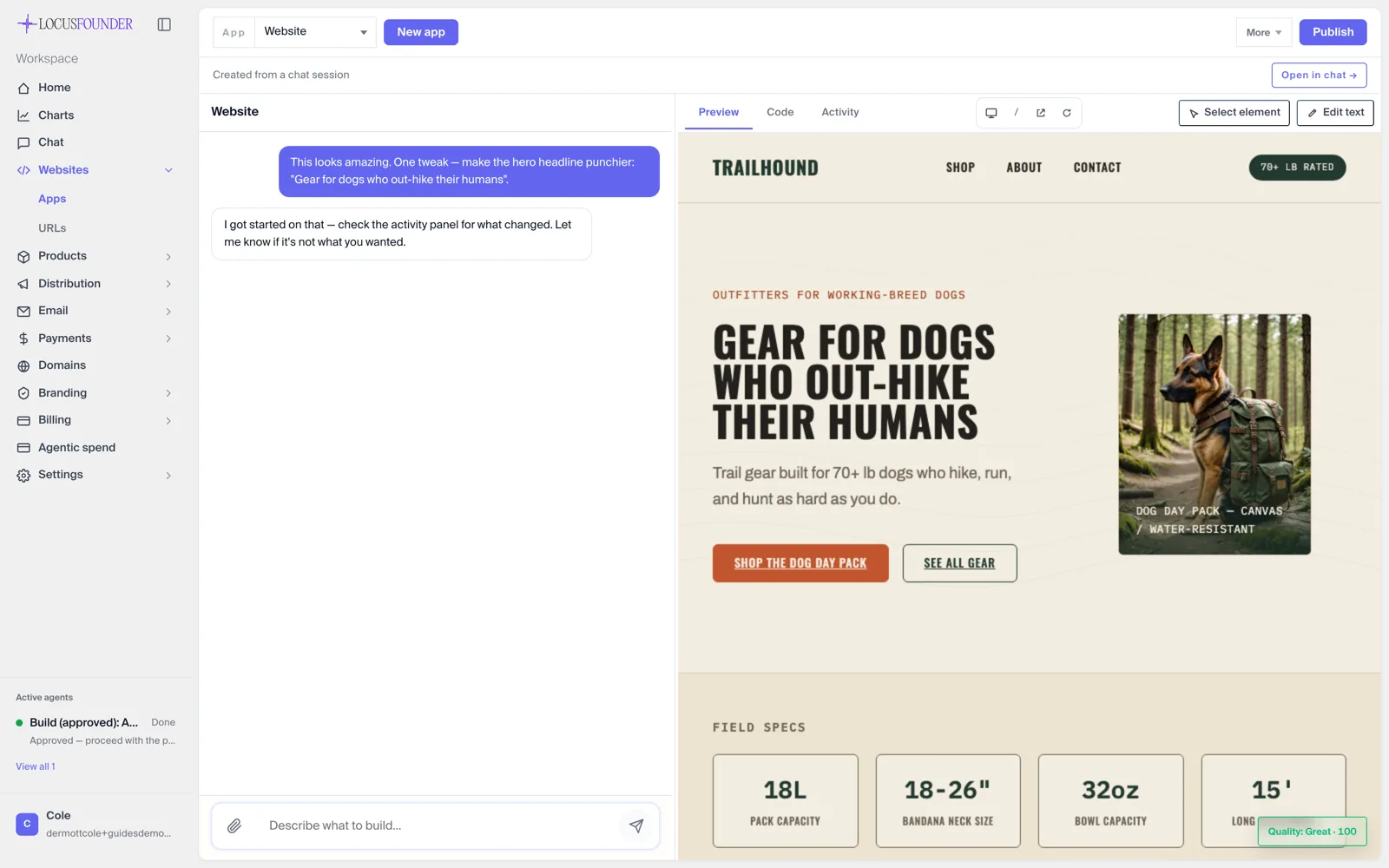 The site takes shape next to the conversation. Ask for a punchier headline and watch it land in the preview.
Step 5: Sign up and let it build for real
Everything up to here happens before you've created an account. If you like what you see, you sign up, pick a plan, and the agent gets to work on the real version: a full site instead of a preview, checkout wired up, the plan turned into tasks it starts executing.
You don't watch a progress bar. The agent tells you what it's doing and pings you when something needs your input.
Step 6: Go live
Three things stand between the preview and a real business, and the agent handles most of each.
A domain. The agent can register one for you, or connect one you already own. DNS setup, the part everyone dreads, is its problem, not yours.
Payments. You connect a Stripe account, which takes a few minutes and is mostly identity verification on Stripe's side. After that, your site can take real money.
Products. If you're selling physical goods, the agent sources them from supplier catalogs (Printify for print on demand, Wholesale2B for general merchandise) and stocks your store with your markup applied. Digital downloads skip this step entirely.
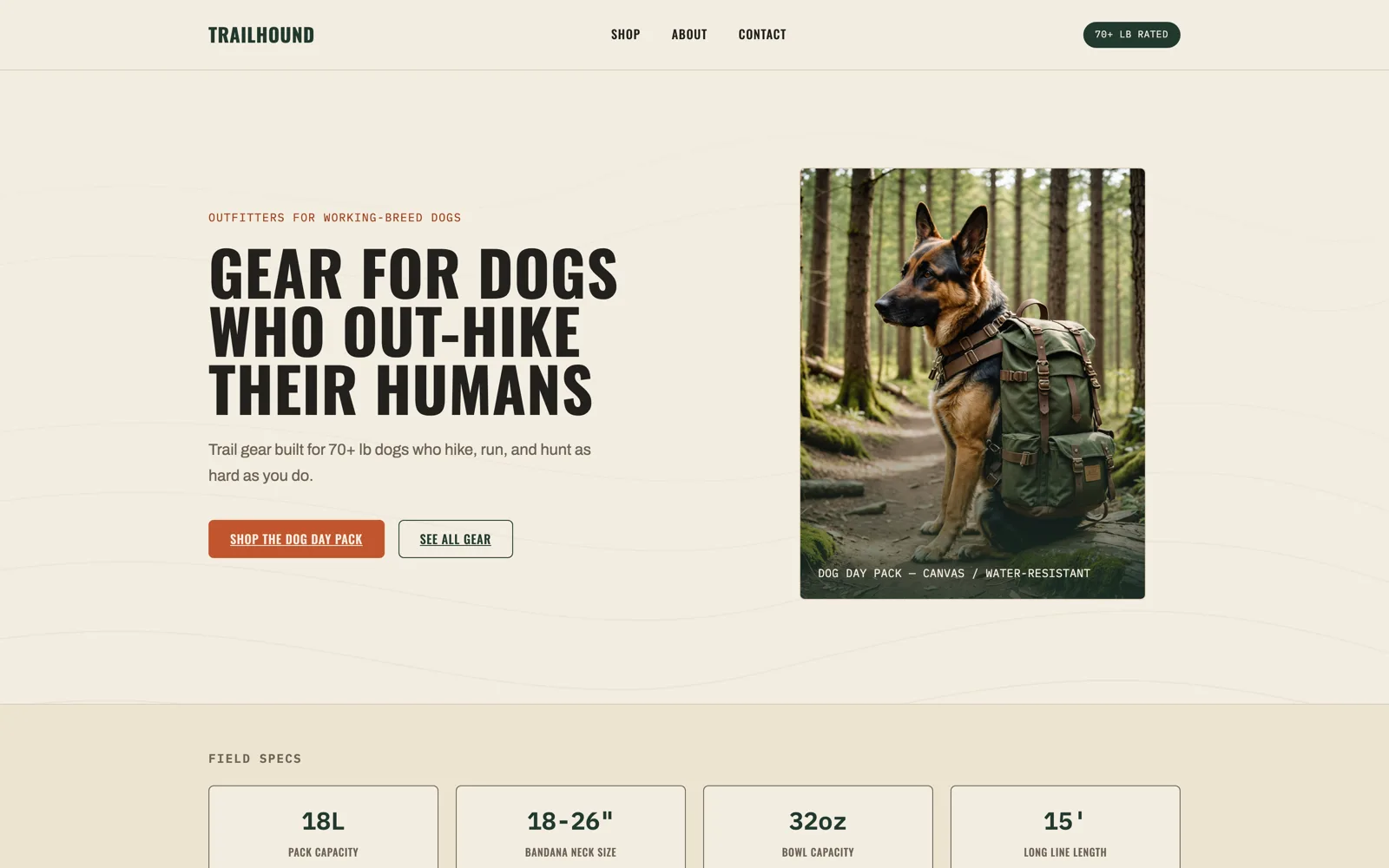
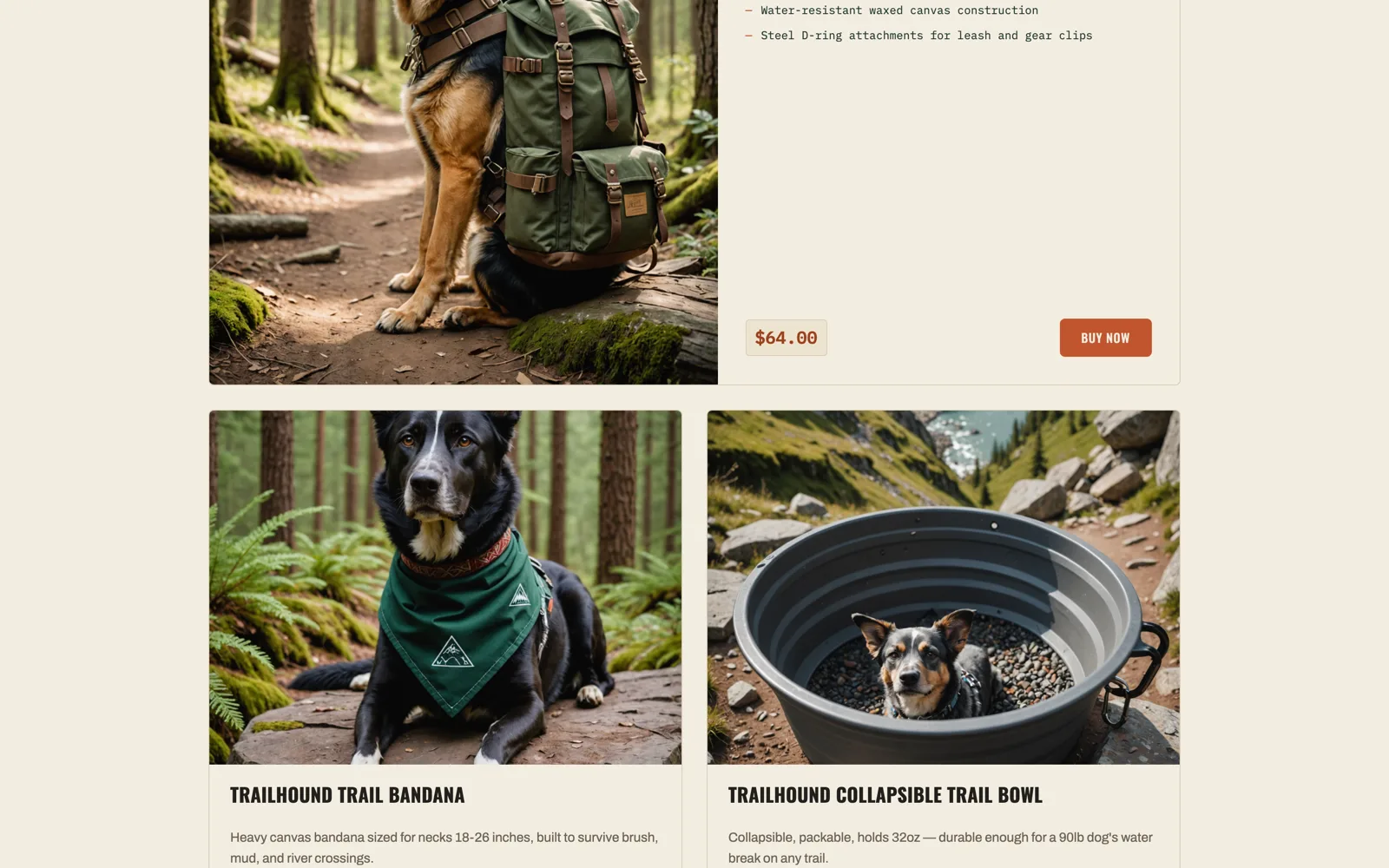
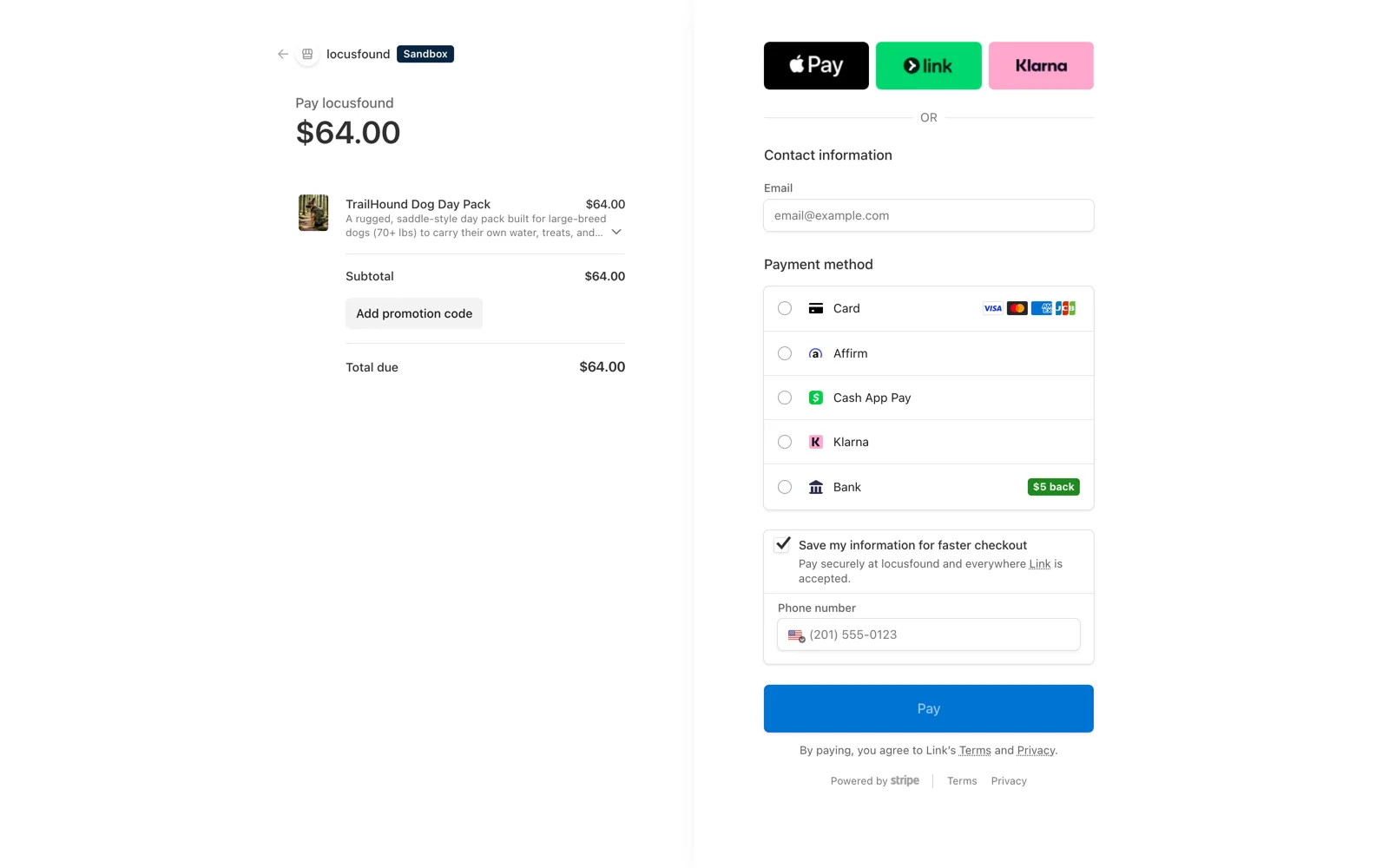 The finished store: hero, products, and a real Stripe checkout taking cards, Apple Pay, and the rest.
What happens after launch
This is where Locus Founder stops resembling every other tool. The site going live is the start of the agent's job, not the end.
Link your Telegram or iMessage and the business rides along in your pocket. The agent messages you when an order comes in, when something needs a decision, when a build finishes. You message it the way you'd message an employee: "add a bundle discount," "the hero photo feels off, try something warmer," "what did we sell this week?" It does the work and reports back.
The rhythm is simple: you make decisions, the agent makes changes.
Three mistakes to avoid
Starting vague and staying vague. "A wellness brand" gives the agent nothing to research and nothing to build. Name a product and a person who'd buy it. You can widen later.
Brushing off the critique. When the agent raises a concern, that concern came from data. You don't have to agree with it, but "let's just move on" wastes the most useful step in the process.
Polishing instead of launching. A month of tweaking the site is a month of zero customers. Get it live, get it in front of people, and let real reactions tell you what to fix. The agent can change anything in minutes, so nothing you ship is permanent.
Where to go next
If you're ready, go to locusfounder.com and start the conversation. It costs nothing to get to the preview, and you'll know within ten minutes whether this is for you.
If you want to prepare first, the other guides in this series cover each stage in depth: picking an idea that can actually make money, setting up products and payments, and getting your first customers.
Prefer this guide as a file? There is a free PDF version just below.